
Consider how much planning goes into a public park. Landscape architects think about the mobility of pedestrians, accessibility, drainage and vegetation, in addition to parking, lighting and playground layout. They also take into consideration how different groups are going to utilize the area. While it’s not always the most utilized structure on the property, it can be built from scratch.
A restroom deserves more consideration. There are sanitation and plumbing needs, accessibility standards along with maintenance, security, and building code requirements. It must also withstand the rigors of time and usage by the public.
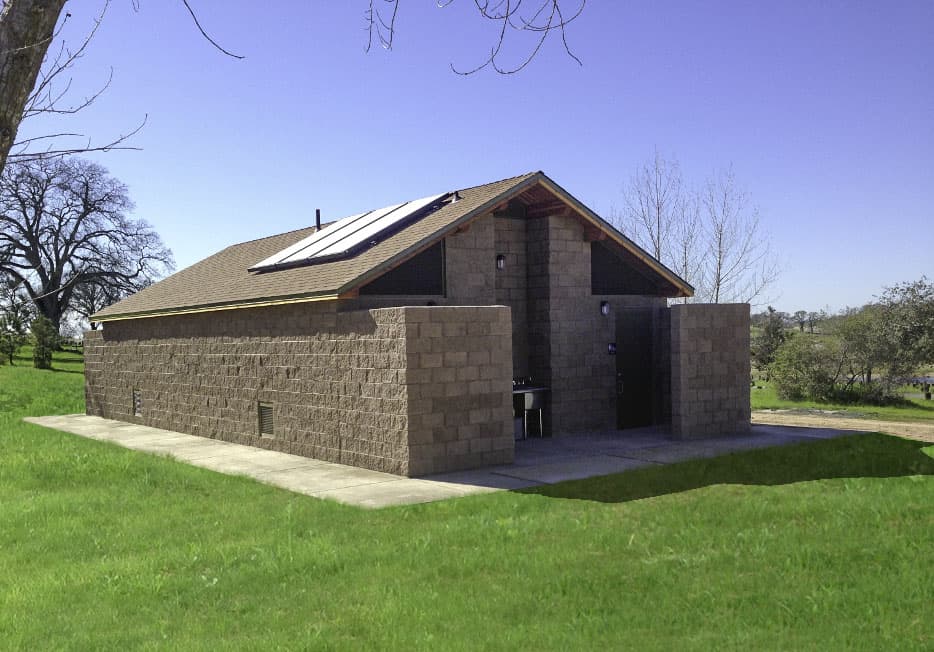
Image credit: romtec.com
Romtec’s system allows the restroom to be a component of a bigger plan and not an extra-curricular thought.
Prefabricated Buildings do not have to be identical
Prefabricated park restrooms may imply an insufficient range of common designs. Kit-based approaches can perform differently.
Romtec creates custom designs and offers the plans specifications, engineering documents as well as building materials for their construction. Landscape architects are able to choose the architectural style and materials suitable for the particular project while drawing on Romtec’s extensive experience in codes, ADA requirements, components price, and construction.
If a municipal entity is working on renovating an area of community that dates to the 1800s, it could be looking for a completely different look than the recreation department developing a modern facility for sports. Both can still benefit from a well-organized building supply procedure without having the design identical.
The Design Plan for City Streets has a different
Toilets in urban areas are subject to their own operating realities. The restrooms may have constant pedestrian traffic. There are also worries concerning vandalism, security, and cleanliness.
Romtec’s sidewalk restrooms incorporate visibility into the exterior design to encourage natural surveillance while maintaining the functionality expected of a public facility. The selection of low-maintenance parts and materials that are vandal-resistant is crucial because public entities are frequently faced with constant repairs.
It’s not just about create a better bathroom. Layout, materials and the surrounding environment all contribute for making it easier to maintain.
The most important issue is What’s Underground
Before deciding on what a bathroom should look like, planners need to determine the infrastructure that is available.
In a well-developed city park water, electricity, and sanitary sewers may be conveniently connected. If you decide to extend these utilities to a remote camp site or trailhead it can be costly.
For suitable locations vault toilets offer a waterless alternative. Romtec also has components for these facilities, like its single-piece plastic toilet riser. The material, a smooth, molded plastic, is impervious to chemical attack and is easy to maintain and designed to deter the growth of bacterial. The vault toilet is able to be put in either existing or new bathrooms.
People who arrive later than the time of closing must be accommodated in a manner that is warm.
Visitors only experience the restroom for a short period of. Maintenance crews are forced to manage the issue for a long time.
That difference in perspective matters. It is difficult to wash surfaces, parts that break easily and materials that are not made for repeated cleaning are just a few examples of design decisions that can become costly.
Cost, durability, and reliability are the three main factors to consider when designing the process. Energy-efficient and sustainable materials, eco-friendly systems, vandal-resistant fixtures, and efficient maintenance access could affect the long-term value.
The landscape might still include one small structure
The design of the restroom doesn’t have any need to compete with the parks surrounding it, nor is it necessary to look sloppy.
Romtec’s bespoke approach gives designers and public agencies the possibility of coordinating restroom facilities with pavilions, shelters as well as campgrounds, pools and trails as well as the surrounding architecture. In the same way the practical aspects like ADA accessibility and code compliance remain at the center of the initiative.
If all these elements are considered together, then the end result is not just an area in which toilets can be set up. This is a public infrastructure piece that’s designed for the specific locality and surrounding.